
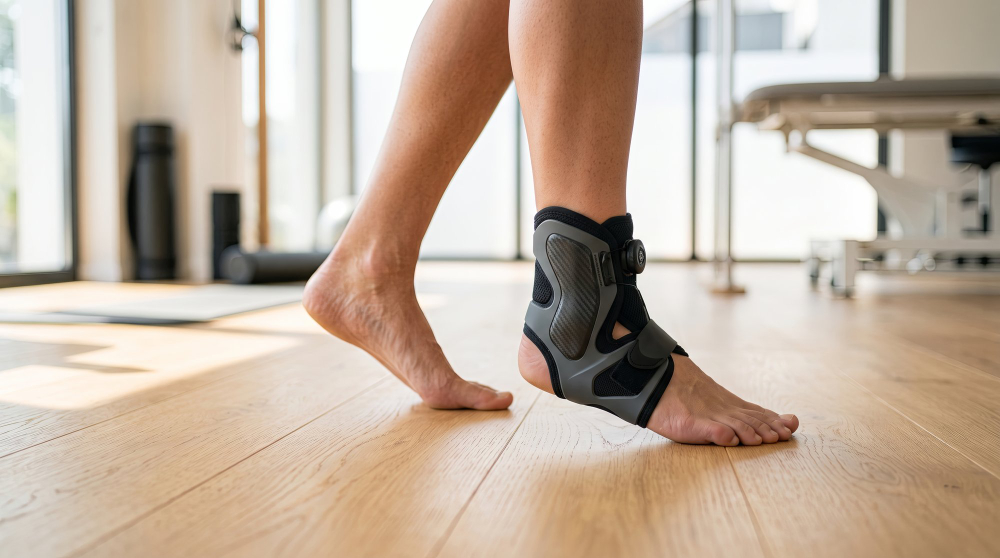
Many people need help to walk safely. Ankle Foot Orthosis (AFO) is a special device that supports the ankle and foot. It is also called a foot brace or orthotic device. Often, doctors recommend an AFO for people who have trouble lifting their foot or keeping their ankle steady. In this blog, you will learn what an AFO is, who may need it, and how it can help.
What Is an Ankle Foot Orthosis (AFO)?
First, an Ankle Foot Orthosis (AFO) is a brace that fits around the ankle and foot. It is usually made from plastic, metal, or a mix of materials. Because it keeps the foot and ankle in the right position, it helps people walk better. Some AFOs are soft, while others are hard. For example, a doctor may choose a soft AFO for mild support or a hard one for more control. Most AFOs are custom-made to fit each person’s leg.
Who May Need an AFO?
Many people can benefit from an AFO. If you have weak muscles in your foot or ankle, you may need extra support. Sometimes, children and adults with certain health problems need an AFO to walk safely. For instance, people with nerve injuries or muscle weakness often use a foot brace. In some cases, your doctor or physical therapist will suggest an AFO after an injury or surgery. Access to orthotic services may depend on your local clinic or hospital.
Common Conditions Treated with AFOs
Doctors use AFOs to help with many health problems. Some common conditions include:
In addition, some people with arthritis or foot pain use an AFO for extra support. According to the World Health Organization, orthotic devices like AFOs can improve walking and prevent falls.
How Is an AFO Fitted and Used?
First, a doctor or orthotist will check your foot and ankle. Next, they may take a mold or scan to make a custom AFO. After the AFO is ready, you will try it on to make sure it fits well. Sometimes, small changes are needed for comfort. Once you have your AFO, you will learn how to put it on and take it off. Most people wear socks under the brace to protect their skin. You may need to wear special shoes that fit over the AFO. Physical therapists often teach you how to walk safely with your new foot brace.
Benefits and Limitations of AFOs
There are many benefits to using an AFO. For example, it can:
However, there are some limits. Sometimes, an AFO may feel bulky or hot. You may need time to get used to it. In rare cases, it can cause skin irritation or pressure sores. If you notice any pain or redness, you should tell your doctor right away. According to the CDC, regular checks help prevent problems with orthotic devices.
Tips for Living with an AFO
Living with an AFO can be easy with the right steps. Here are some helpful tips:
Additionally, you should follow your care team’s advice for the best results. Many local clinics offer support and adjustments if you need help.
Preventing Further Foot and Ankle Problems
While using an AFO, it is important to protect your feet and ankles. For example, you should:
Because regular care can prevent new problems, always follow your doctor’s instructions. If you notice any changes in your foot or ankle, contact your healthcare provider. The CDC and WHO recommend early care for foot and ankle issues to avoid serious problems.
Conclusion
If you think an AFO might help you or a loved one, Inspire life Prosthetics & Orthotics llp is here to support you. Contact us today to schedule a consultation and learn more about your options.