
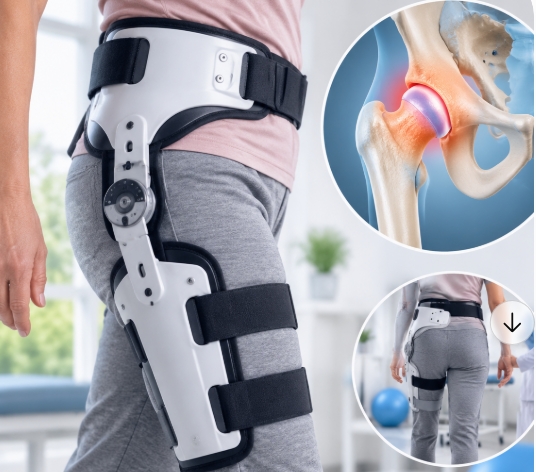
What Are Hip Orthoses?
Hip orthoses are special support devices worn around the hip. They help people with joint problems move better and feel less pain. Often, doctors suggest hip orthoses for joint conditions like arthritis or after an injury. These devices are also called hip braces. They come in different shapes and sizes. Some are soft and flexible, while others are firm for more support. Because hip orthoses for joint conditions are easy to use, many people find them helpful in daily life.
Common Joint Conditions Treated with Hip Orthoses
Many joint problems can affect the hip. For example, arthritis is a common cause of hip pain. Hip orthoses can help with several conditions, such as:
Because these devices support the hip, they can make walking and moving easier. In many cases, the best hip orthoses for arthritis or other joint pain are chosen by a doctor or therapist.
How Hip Orthoses Work
Hip orthoses work by holding the hip in a safe position. This helps reduce pain and stops the joint from moving too much. For instance, a hip brace for joint pain can limit harmful movements. As a result, the joint gets a chance to heal. Some hip orthoses also provide gentle pressure. This can help with swelling and make the hip feel more stable. Because of these features, support devices for hip conditions are often part of a treatment plan.
Benefits and Limitations
Hip orthoses offer many benefits. However, they also have some limits. Here are some key points:
On the other hand, hip orthoses may not work for everyone. For example, they may feel bulky or uncomfortable at first. Some people may need time to get used to wearing them. Still, with the right fit and guidance, most people find them helpful.
How to Use Hip Orthoses Safely
Using hip orthoses the right way is important. Here are some safety tips:
Because safety matters, ask your healthcare provider if you notice any problems. In many cases, small changes can make the device more comfortable.
Tips for Daily Living with Hip Orthoses
Wearing a hip orthosis can feel new at first. However, these tips can help:
Because daily routines may change, plan ahead for activities. Over time, most people adjust well to their hip brace for joint pain.
Prevention and Lifestyle Guidance
While hip orthoses help manage symptoms, healthy habits can also protect your joints. For example, try these steps:
Because prevention is key, talk to your doctor about ways to keep your hips strong. Even small changes can make a big difference over time.
When to Consult a Healthcare Professional
If you have hip pain or trouble moving, see a doctor. For instance, sudden swelling, redness, or severe pain may need quick care. Also, if your hip orthosis feels uncomfortable or causes skin problems, ask for help. Because every person is different, only a healthcare professional can suggest the best hip orthoses for arthritis or other joint conditions.
Consult at Inspire life Prosthetics & Orthotics for personalized guidance on hip orthoses for joint conditions.